





 NEW
NEW All Categories
 Aasan
Aasan Mala (Rosary)
 Religious Books
 Idols/Murti
 #Trending
 SALE
SALEDifferent Types of Rudraksha (Mukhi) and Their Benefits
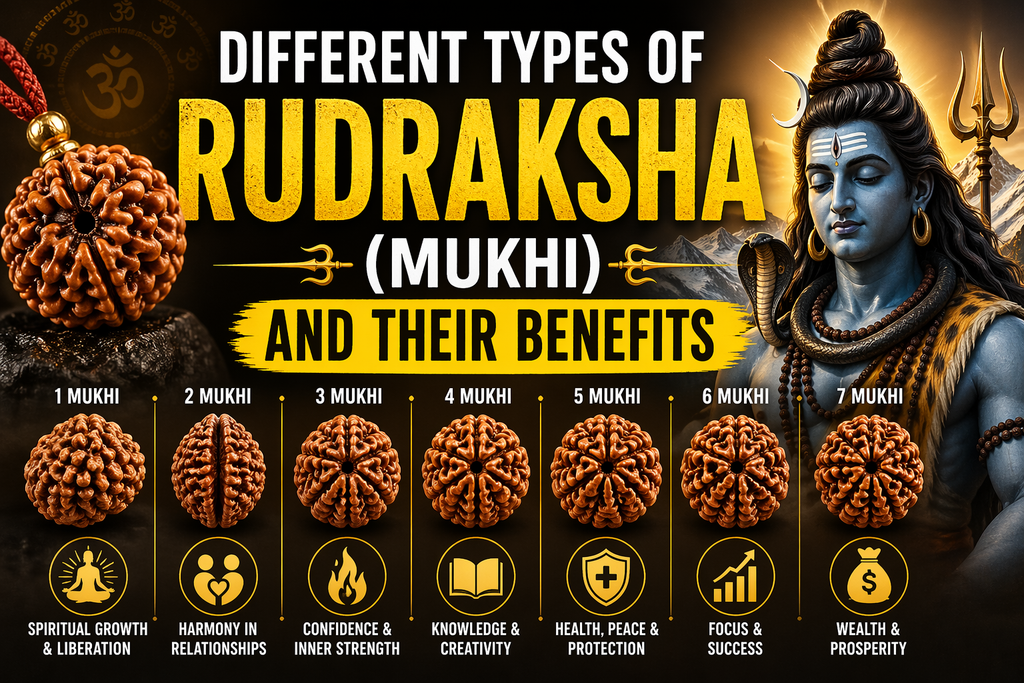
When people buy rudraksha beads, one question always comes up—which type should I choose? With so many options like 1 mukhi, 5 mukhi, 7 mukhi, and more, it can feel confusing at first. The truth is, each rudraksha mukhi (face) has its own structure and purpose. Some are commonly used for daily wear, while others are chosen for specific intentions, but instead of overthinking, it’s better to understand the basics clearly and then decide what fits your routine.
This guide will Guide you through the different types of rudraksha, their benefits, and how to choose the right one without confusion.
What Does “Mukhi” Mean in Rudraksha?
The term mukhi refers to the number of natural lines or segments on a rudraksha bead. These lines run from one end to the other and define the type of bead.
For example:
-
A bead with 5 natural lines is called 5 mukhi rudraksha
-
A bead with 7 lines is called 7 mukhi rudraksha
Each mukhi is considered different in terms of use, but one important thing to remember is—consistency in wearing or using it matters more than the type itself.
Different Types of Rudraksha (Mukhi) and Their Uses
Let’s understand the most commonly used types—from 1 mukhi to 14 mukhi—so you can understand them in a simple way.
1 Mukhi Rudraksha
The 1 mukhi rudraksha is considered the most unique type because it has a single natural line (mukhi). It represents focus and simplicity. People usually choose it when they want something minimal and centered rather than a full mala because it is rare,and not commonly used in everyday setups.
Benefits (General Belief):
-
Helps bring mental clarity
-
Encourages focus during meditation
-
Supports a simple and steady routine
Common Use:
-
Personal meditation
-
Worn as a single bead
2 Mukhi Rudraksha
The 2 mukhi rudraksha has two natural lines and is often associated with balance and connection. It is usually chosen by people who want to maintain stability in their daily routine without adding complexity.
Benefits (General Belief):
-
Supports emotional balance
-
Helps maintain harmony in daily life
-
Useful for building consistency
Common Use:
-
Worn as a single bead
-
Simple daily wearing
3 Mukhi Rudraksha
The 3 mukhi rudraksha is easy to include in everyday use and is often chosen by beginners who want a straightforward option. It doesn’t require any special setup and fits naturally into a daily routine.
Benefits (General Belief):
-
Helps improve focus
-
Supports a calm mindset
-
Makes daily meditation easier
Common Use:
-
Wearing
-
Basic meditation
4 Mukhi Rudraksha
The 4 mukhi rudraksha has four natural lines and is usually selected by people who want something slightly different from the basic options. It is often added to custom malas or worn individually.
Benefits (General Belief):
-
Helps with clarity in thinking
-
Supports better concentration
-
Useful for structured routines
Common Use:
-
Wearing
-
Adding to custom malas
5 Mukhi Rudraksha (Most Common)
The 5 mukhi rudraksha is the most widely used type and is considered the safest starting point. It is commonly used in rudraksha mala, making it practical for daily wear and chanting.
Benefits (General Belief):
-
Promotes calmness and stability
-
Helps maintain a consistent routine
-
Easy to use for daily meditation
Common Use:
-
Daily wearing
-
Used in most rudraksha malas
Best choice for beginners.
6 Mukhi Rudraksha
The 6 mukhi rudraksha is another popular option that people often choose after the basic 5 mukhi. It is simple, practical, and easy to include in everyday life.
Benefits (General Belief):
-
Helps improve focus and discipline
-
Supports steady daily habits
-
Encourages consistency
Common Use:
-
Wearing
-
Daily routine use
7 Mukhi Rudraksha
The 7 mukhi rudraksha is chosen by people who want to explore beyond the basic types while still keeping their routine simple. It works well for regular use.
Benefits (General Belief):
-
Supports balance in routine
-
Helps maintain a calm mindset
-
Useful for long-term use
Common Use:
-
Wearing
-
Personal use
8 Mukhi Rudraksha
The 8 mukhi rudraksha is less common but is still used by people who prefer specific combinations. It is usually not part of standard malas.
Benefits (General Belief):
-
Helps improve focus
-
Encourages stability in routine
-
Supports consistent practice
Common Use:
-
Individual wearing
-
Custom combinations
9 Mukhi Rudraksha
The 9 mukhi rudraksha is often chosen by people who want something unique compared to commonly used beads. It is more preference-based.
Benefits (General Belief):
-
Helps build confidence
-
Supports mental strength
-
Useful for personal focus
Common Use:
-
Individual wearing
-
Selective use
10 Mukhi Rudraksha
The 10 mukhi rudraksha is generally used as a single bead rather than in a full mala. It suits people who prefer a minimal and focused setup.
Benefits (General Belief):
-
Helps maintain mental clarity
-
Supports a balanced routine
-
Encourages calmness
Common Use:
-
Wearing as a single bead
-
Personal use
11 Mukhi Rudraksha
The 11 mukhi rudraksha is chosen by those who want a more specific type of bead. It is not commonly used in daily malas but can be worn individually.
Benefits (General Belief):
-
Supports focus and awareness
-
Helps maintain discipline
-
Encourages consistency
Common Use:
-
Individual wearing
-
Selective use
12 Mukhi Rudraksha
The 12 mukhi rudraksha is usually worn as a single bead and is not part of common malas. It is chosen based on personal preference.
Benefits (General Belief):
-
Helps maintain confidence
-
Supports clarity in routine
-
Encourages steady focus
Common Use:
-
Wearing as a single bead
-
Personal selection
13 Mukhi Rudraksha
The 13 mukhi rudraksha is less common and is usually selected by people who want something beyond basic types. It is not used in regular daily malas.
Benefits (General Belief):
-
Helps improve confidence
-
Supports positive thinking
-
Encourages personal growth
Common Use:
-
Individual wearing
-
Occasional use
14 Mukhi Rudraksha
The 14 mukhi rudraksha is one of the higher mukhi types and is usually not part of daily routines. It is selected in specific cases rather than regular use.
Benefits (General Belief):
-
Helps improve decision-making
-
Supports mental clarity
-
Encourages stability
Common Use:
-
Individual use
-
Specific or selective purposes
How to Choose the Right Rudraksha
Instead of overthinking, follow these simple points:
1. Start Simple
Go with a 5 mukhi rudraksha mala if you’re beginner.
2. Focus on Authenticity
Always look for original rudraksha beads instead of just focusing on price.
3. Choose Comfortable Size
Small beads (4mm–6mm) → easy for wearing
Medium beads (6mm–8mm) → balanced
Large beads (8mm–10mm) → better for chanting
4. Think About Daily Use
Choose something you can wear or use regularly without effort.
Conclusion
FAQ's
1) Which rudraksha is best for beginners?
The 5 mukhi rudraksha is the best option for beginners because it is simple, easy to use, and suitable for daily wear.
2) Can I wear different mukhi rudraksha together?
Yes, you can wear different mukhi rudraksha together, but it’s better to keep it simple if you are just starting.
3) How do I choose the right rudraksha?
Choose based on your comfort, daily use, and simplicity. Starting with a 5 mukhi rudraksha is usually the safest choice.
4) What is the difference between small and large rudraksha beads?
Small beads are easier to wear, while larger beads are often preferred for chanting or meditation.
5) How many beads are in a rudraksha mala?
A standard rudraksha mala usually has 108 beads.




%20and%20Their%20Benefits)