


 NEW
NEW All Categories
 Aasan
Aasan Mala (Rosary)
 Religious Books
 Idols/Murti
 #Trending
 SALE
SALEHow to Check Original Rudraksha?
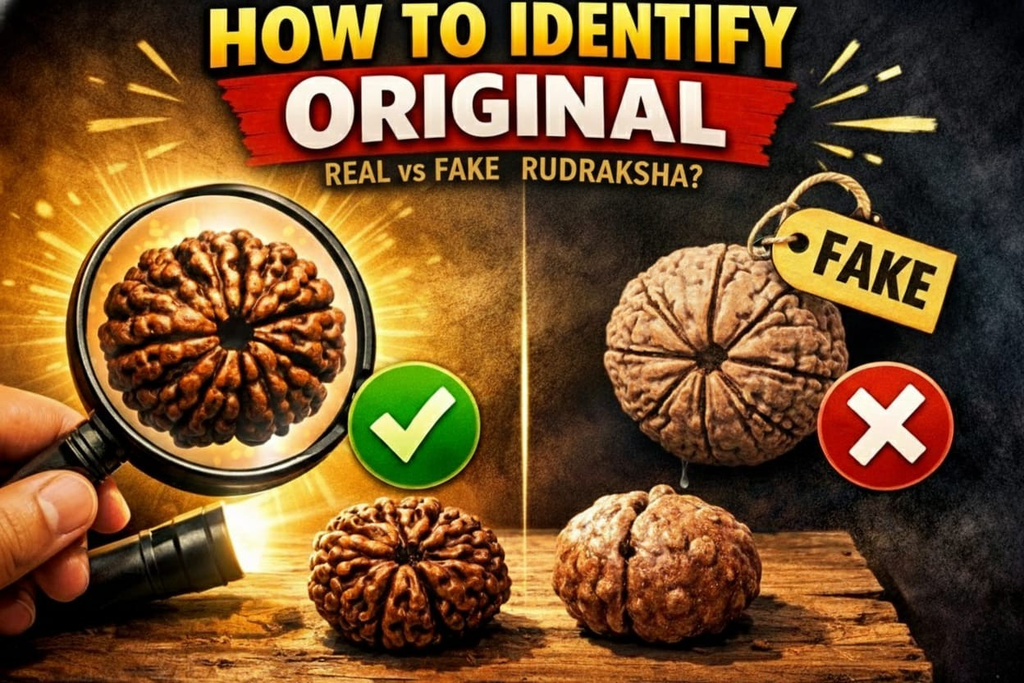
Rudraksha beads are more than just spiritual accessories. For many people, they are deeply connected to faith, meditation, and personal energy. That’s exactly why the market today is filled with confusion — real beads, fake beads, modified beads, and polished versions that look too perfect to trust.
If you’re wondering how to check the original Rudraksha, you’re not alone. It’s one of the most searched questions online, and for good reason. No one wants to invest in something sacred only to later discover it wasn’t genuine.
In this guide, you’ll learn:
-
How to check original rudraksha with coin and in water
-
How to tell if a rudraksha is real or fake
-
Common market scams
-
Smart buying tips to avoid getting cheated
Let’s start with the basics.
What Is Rudraksha
Rudraksha beads come from the seeds of the Elaeocarpus ganitrus tree. These trees are mainly found in Nepal, Indonesia (Java), and parts of India. In spiritual traditions, Rudraksha is associated with Lord Shiva and is believed to carry natural vibrations.
But here’s the truth — the spiritual value only exists if the bead is genuine.
With rising demand, fake rudraksha beads made of plastic, wood, resin, or glued pieces are widely sold in the market. That’s why understanding how to check original Rudraksha is extremely important before buying.
How to Identify Original Rudraksha
The first and most reliable step is visual inspection. A real bead has natural characteristics that are difficult to copy perfectly.
1. Check the Mukhis (Natural Lines)
Every rudraksha has vertical lines called mukhis. These lines run from top to bottom and divide the bead into sections.
Here’s what to observe:
-
The lines should be deep and naturally formed.
-
They must run continuously from one end to the other.
-
They should not look scratched or carved.
-
The grooves won’t be perfectly symmetrical.
For example, a 5-mukhi rudraksha will have five clear vertical segments. If the lines look machine-cut or too perfect, that’s a warning sign.
Also, inside the bead, there are natural chambers. The number of chambers usually matches the number of mukhis. This is why lab testing works (more on that later).
2. Check the Central Hole to Identify Original Rudraksha
One of the simplest ways to identify an original Rudraksha bead is by examining its central hole. A genuine Rudraksha naturally has a hole running through the center, as this is the point where it was attached to the tree.
Signs of an Authentic Rudraksha:
-
The hole looks natural, not perfectly round
-
Slight unevenness is normal
-
The surface inside the hole is not overly smooth
Red Flags to Watch For:
-
A very smooth or machine-polished hole
-
An oversized drilled opening
-
Off-centered or artificially drilled holes
A natural central hole may appear slightly irregular — and that’s completely normal. In fact, small imperfections often indicate authenticity rather than flaws.
3. Feel the Texture
Real rudraksha beads feel:
-
Hard and woody
-
Rough or slightly spiky
-
Uneven on the surface
If it feels glossy, smooth like plastic, or extremely lightweight, it may be fake.
4. Look at the Color
Original rudraksha typically comes in:
-
Light brown
-
Reddish brown
-
Dark brown
If it looks artificially bright red or extremely shiny, it may be dyed or polished.
How to Check Original Rudraksha With Coin and in Water
These traditional tests are extremely popular online. But do they really work? Let’s break them down honestly.
1. Water Test (Float or Sink Method)
This is the most common method when people search how to check original rudraksha in water.
The belief:
-
Real rudraksha sinks
-
Fake rudraksha floats
Reality:
-
Most genuine beads sink because they are dense.
-
Some real beads may float if they are dry or lightweight.
-
Some fake beads are made heavy to sink deliberately.
So, this test can catch obvious plastic fakes — but it is NOT 100% reliable.
If it floats, it’s suspicious.
If it sinks, it still doesn’t guarantee authenticity.
2. Coin Test (Copper Coin Test)
The Belief:
The common belief is that when a rudraksha is placed between two copper coins and gently pressed, it will start rotating on its own. Some say this happens because the bead has natural energy or magnetic power, and that rotation proves it is original.
What Actually Happens
In reality, the movement usually happens because of:
-
The round shape of the bead
-
Surface friction between the coin and the bead
-
Slight hand pressure while holding it
Even an ordinary round seed or wooden bead can rotate under similar conditions. The spinning does not confirm authenticity.
How to Identify Instead:
Rather than depending on the coin test, focus on more reliable checks:
-
Examine the natural mukhi lines — they should run clearly from top to bottom without tool marks.
-
Check the texture — it should feel hard, woody, and uneven, not smooth or glossy.
-
Inspect the central hole — it should look natural, not perfectly machine-drilled.
-
For expensive beads, prefer an X-ray lab test to confirm internal chambers.
The coin test is based more on belief than science. It can be tried out of curiosity, but it should never be the deciding factor when identifying a real rudraksha.
3. Milk Test (Popular but Misleading)
There’s a myth that milk won’t spoil if a real rudraksha is placed inside it.
There’s no scientific evidence supporting this. Milk spoils based on temperature and bacteria — not because of a bead.This test should not be used to judge authenticity.
Rudraksha Real or Fake: Common Market Scams
Understanding how sellers cheat is just as important as knowing how to test.
Here are the most common fake types:
1. Plastic or Resin Rudraksha
These are mass-produced and easy to identify:
-
Very smooth surface
-
Repeated patterns
-
Extremely lightweight
-
Artificial shine
Real beads never look identical to each other.
2. Carved Wooden Seeds
Sometimes, betel nuts or other seeds are carved to mimic mukhis.
Signs:
-
Soft texture
-
Tool marks visible under magnification
-
Lines look engraved, not natural
3. Altered Mukhi Rudraksha
Some sellers carve extra lines to convert a low mukhi bead into a rare one.
Warning signs:
-
Lines look too sharp
-
Grooves stop midway
-
Uneven depth
-
Tool scratch marks
Rare mukhi beads are expensive. If someone is selling them cheaply, be cautious.
4. Glued or Joined Rudraksha
Some beads are glued together to create rare varieties like Gaurishankar.
Look carefully for:
-
Glue lines
-
Color mismatches
-
Visible joining marks
These are tricky and often require expert inspection.
Smart Tips to Buy Genuine Rudraksha
Knowing how to check original Rudraksha is important — but buying from the right source is even more important.
1. Buy From Trusted Sellers Like Achleshwar
Always purchase spiritual or Rudraksha products from trusted and established sellers. Authenticity directly affects the benefits you receive, so choosing the right source is important. Reputed brands like Achleshwar are known for offering genuine and energized products with proper quality assurance.
Choose Achleshwar because:
-
They Have strong and genuine customer reviews
-
Provide clear product details and specifications
-
Offer a proper return or replacement policy
-
Share authenticity proof or lab certificates
Avoid random roadside sellers offering rare beads at unrealistic prices, as they may sell artificial or low-quality products. Buying from a trusted seller ensures you receive original items with real spiritual value.
2. Ask Questions
A genuine seller should confidently answer:
-
Origin (Nepal or Java)
-
Mukhi count
-
Testing proof
-
Pricing explanation
If they hesitate or avoid details, walk away.
3. Be Careful With Rare Claims
Round one-mukhi rudraksha is one of the most misused terms in the market. If someone is offering a rare bead at a discount, that’s usually a red flag.
Rare beads are naturally expensive due to scarcity.
4. Trust Physical Inspection
Before buying:
-
Check mukhis carefully
-
Examine the hole
-
Feel the texture
-
Observe surface irregularities
A real rudraksha never looks factory-perfect.
Final Thought
When it comes to identifying original Rudraksha, awareness is your biggest protection. Don’t depend only on water tests or coin tests. Observe the mukhi lines carefully, check the texture, understand common market tricks, and whenever possible, prefer lab-tested beads.
If you want peace of mind along with authenticity, consider buying from Achleshwar, where quality verification, proper guidance, and genuine Rudraksha beads are prioritized. Choosing the right source ensures that what you wear carries true natural energy — not doubt.
Take your time, stay informed, and choose wisely. A real Rudraksha deserves a real connection.
Read More About: Benefits of Wearing Rudraksha Mala Daily
FAQs
1. How to check the original Rudraksha at home?
Check the natural mukhi lines, rough texture, and central hole. The lines should run from top to bottom without cuts. For full confirmation, prefer an X-ray lab test.
2. How to check the original rudraksha with a coin?
The coin test is based on belief. A bead may rotate due to shape and friction, not because it is genuine. Do not rely on this test alone.
3. Does the original Rudraksha sink in water?
Most real rudraksha beads sink because they are dense. However, the water test is not 100% accurate and should not be the only method.
4. How to identify rudraksha real or fake?
Look for natural, deep mukhi lines, a hard woody texture, and no glue or carving marks. Lab certification is the safest option.
5. Where to buy original Rudraksha online?
Buy only from a reputed Rudraksha seller that clearly mentions mukhi count, origin (Nepal or Java), and provides lab certification. A reliable spiritual brand like Achleshwar ensures verified beads, transparent pricing, and proper customer support.